The US Supreme Court has struck down President Donald Trump’s sweeping global tariffs, ruling that he overstepped his authority by invoking emergency powers.
The 6-3 decision marks a significant defeat for the former president on a key economic initiative.
Court Rules President Exceeded Constitutional Authority
The decision focused on tariffs imposed under an emergency powers law, including the broad reciprocal tariffs Trump levied on nearly every US trading partner.
Chief Justice John Roberts, writing for the majority, emphasized that the Constitution “very clearly” grants Congress not the president the power to impose taxes, including tariffs.
“The Framers did not vest any part of the taxing power in the Executive Branch,” Roberts wrote.
Justices Samuel Alito, Clarence Thomas, and Brett Kavanaugh dissented. Kavanaugh argued:
“The tariffs at issue here may or may not be wise policy. But as a matter of text, history, and precedent, they are clearly lawful.”
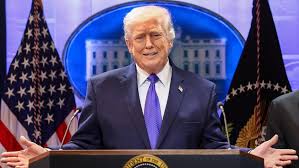
Trump Responds: “Deeply Disappointing”
In a statement on Friday evening, Trump described the ruling as “deeply disappointing” and expressed being “ashamed” of the court.
“Foreign countries that have been ripping us off for years are ecstatic. They’re so happy and they’re dancing in the streets, but they won’t be dancing for long, I can assure you that,” he said.
Trump also indicated plans to pursue alternative measures:
“Other alternatives will now be used to replace the ones that the court incorrectly rejected. We have great alternatives,” he added.
What This Means for Tariffs
The ruling does not prevent Trump from imposing duties under other laws, though these laws carry more limitations on speed and severity. Administration officials have said they expect to maintain a tariff framework under alternate legal authority.
The Legal and Political Context
This case represents the first major test of Trump’s broad economic agenda before the Supreme Court, which he helped shape through appointments of three conservative justices.
Legal opposition spanned the political spectrum, with libertarian and pro-business groups also challenging the tariffs. Polls indicated that tariffs were not widely popular, with many Americans concerned about rising costs and affordability.
Constitutional Debate: Emergency Powers vs. Congressional Authority
The Trump administration relied on a 1977 law, the International Emergency Economic Powers Act (IEEPA), to justify tariffs under a declared national emergency. While previous presidents have used the law for sanctions, Trump was the first to apply it to import taxes.
Trump’s tariffs, described as “reciprocal,” were introduced in April 2025 to address trade deficits, following earlier duties targeting Canada, China, and Mexico under the pretext of a drug trafficking emergency.
Massive Economic Implications
The Congressional Budget Office estimates the tariffs could have cost the economy around $3 trillion (€2.76tn) over the next decade. The US Treasury collected over $133 billion (€122bn) from these import taxes as of December 2025.
Since April 2, 2025, the Treasury has taken in approximately $240 billion (€221bn) in tariff revenue. Analysts warn that potential refunds could cost around $120 billion (€110bn), about 0.5% of US GDP.
Justice Kavanaugh, in dissent, flagged the refund issue as potentially turning into a “mess.” Whether the Trump administration will owe reimbursements remains uncertain, though the lawsuits now have stronger legal grounds.
Market Reacts to Ruling
The Supreme Court decision, announced shortly after the New York open, triggered an initial surge in the S&P 500, which spiked nearly 1%. Gains later eased, with the index remaining about 0.3% higher than the previous close.
Investors have generally welcomed efforts to reduce tariffs, but the assumption remains that Trump will continue pushing his tariff agenda, tempering broader market optimism.