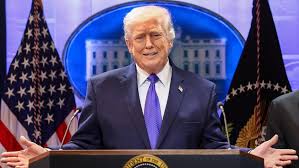
India has indefinitely postponed a high-profile trade delegation to the United States following a US Supreme Court ruling that struck down significant parts of former President Donald Trump’s tariff program.
Mission Cancelled as Court Ruling Creates Uncertainty
The three-day trade mission, scheduled to begin on Monday, aimed to finalize a much-discussed interim trade agreement between the two nations. However, officials agreed to defer the visit after Friday’s Supreme Court decision, which found that key elements of Trump’s tariff regime had been improperly imposed under emergency powers.
Officials familiar with the matter said the visit will be rescheduled to allow both countries to assess the ruling’s impact on the emerging trade deal. “The decision to defer the visit was taken after discussions between officials of the two countries,” a source told Reuters on condition of anonymity. “No new date for the visit has been decided.”
Trump Signals New Tariffs Amid Legal Setback
Following the court ruling, Trump announced plans to impose a new global tariff regime using alternative powers, initially at 10 per cent and later increased to 15 per cent.
The Supreme Court decision has cast doubt over the legal foundation for various duties imposed during Trump’s second term, creating uncertainty in ongoing international trade negotiations.
Impact on India-US Trade
Under the original tariff scheme, Indian goods faced levies of 10 per cent, later raised to 25 per cent. Additional penalties, including a 25 per cent charge linked to India’s continued purchases of Russian oil, pushed some effective tariffs as high as 50 per cent.
On 3 February, Trump announced via social media that he had agreed with Indian Prime Minister Narendra Modi on a trade deal that would reduce American tariffs on India from 25 per cent to 18 per cent. He also said India would halt Russian oil imports in exchange for lifting the punitive levy.
However, details of the agreement were vague, reportedly negotiated over a phone call, leading to skepticism. India has made no public commitment to stop Russian oil imports, and observers now view the deal as a preliminary framework rather than a binding agreement.
Broader Global Implications
The ruling also arrives at a sensitive time in US-China trade relations. Trump’s tariff program had imposed up to 25 per cent duties on $250bn of Chinese imports, with additional 7.5 per cent tariffs on another $110bn. China retaliated with tariffs on $110bn of US goods, targeting products such as soybeans, and filed World Trade Organization complaints.
Analysts suggest the ruling could shift leverage in upcoming US-China negotiations, with Trump scheduled to meet President Xi Jinping from 31 March to 2 April. “It will give China a moral boost in their negotiations with Trump’s team ahead of the summit, but they are prepared for the scenario that nothing actually changes in reality,” said Sun Yun, director of the China program at the Washington-based Stimson Center.
Varg Folkman, an analyst at the European Policy Centre, added: “In general, it will just bring in a new period of high uncertainty in world trade, as everybody tries to figure out what the US tariff policy will be going forward. In the end, it’s going to look pretty much the same.”